
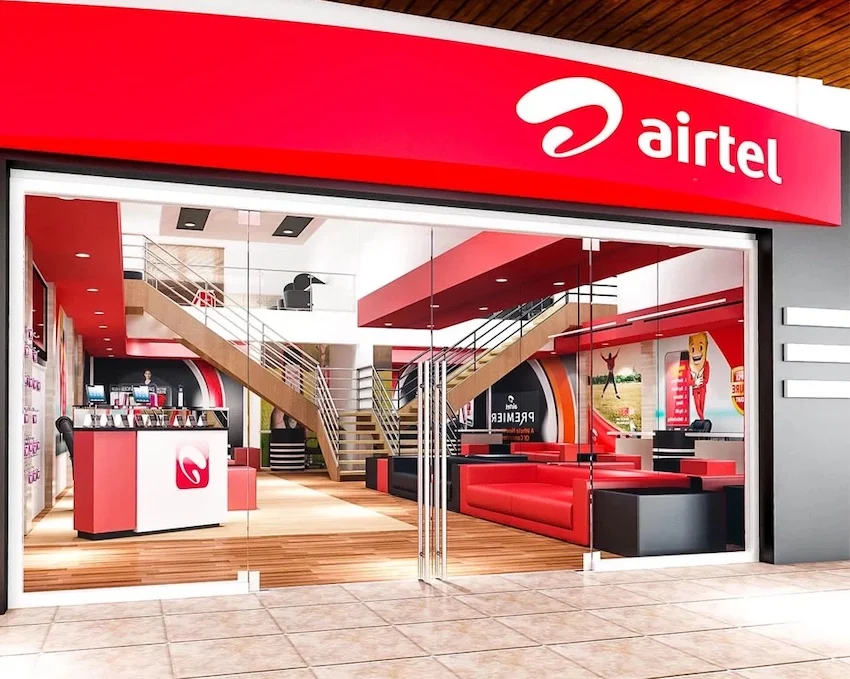
Airtel Africa has taken a major step toward expanding mobile connectivity across the continent after commercially launching a satellite-to-phone service in the Democratic Republic of Congo (DRC) in partnership with SpaceX’s Starlink.
The service, launched on August 14, 2026, is the first commercial deployment of Starlink’s direct-to-mobile technology in Africa. It allows compatible Android smartphones to connect to Starlink satellites when Airtel’s conventional mobile network is unavailable.
The initial service is deliberately limited. Users can send text messages and access selected lightweight applications, including WhatsApp, but it is not yet designed to provide the kind of high-speed internet associated with conventional 4G or 5G networks.
What makes the technology particularly significant is that customers do not need a Starlink satellite dish or a specialised satellite handset. Instead, Starlink satellites effectively extend Airtel’s mobile coverage into areas where conventional cell towers cannot reach.
For people living or travelling in remote regions, this could make a substantial difference. The DRC is one of Africa’s largest countries geographically, with extensive rural and difficult-to-access areas where deploying traditional telecommunications infrastructure can be costly and challenging.
Satellite-to-phone connectivity could allow Airtel to reach some underserved communities without having to construct a mobile tower in every location. In that sense, the technology could become another tool for tackling Africa’s persistent connectivity gap.
The development follows an agreement announced by Airtel Africa and SpaceX in December 2025. The partnership targets Starlink’s direct-to-cell technology across Airtel Africa’s 14 markets, with the initial focus on messaging and selected data services.
The DRC has now become the first Airtel Africa market to transition from trials and preparations to commercial availability. Testing of the technology had also taken place in Kenya.
Airtel plans to extend the service to its other African markets, although each rollout will depend on regulatory approvals.
For now, satellite-to-phone connectivity should be viewed as a complement rather than a replacement for conventional mobile networks. Its biggest value may be in providing a communications lifeline where mobile coverage disappears.
The development nevertheless signals a major change in the telecommunications landscape. Starlink initially expanded across Africa primarily through satellite broadband services that required dedicated equipment. With direct-to-phone technology, its satellites can now potentially connect directly with ordinary smartphones, bringing satellite communications much closer to everyday mobile users.
Follow us on: Facebook, X, LinkedIn, WhatsApp, Telegram, TikTok and Instagram.